Field Notes
Blog
Articles on analog planning, stationery, and intentional living, by Luis Duque.
Latest
No articles found
Try a different search term.

Handmade Field Notes Cover Review: Woodsy Leather
Woodsy Leather's pebbled Chestnut Kodiak Bandito Field Notes cover beat the smooth Texas Mud one in my pocket. At $35 to $45 for a handmade cover, it earns an A tier.
Read →
NutSac Commander Leather Review: Worth $129 for an Analog Kit?
The NutSac Commander Leather is a $129 pouch that holds pens, pencils, cards and a notebook in one place. If you want a pouch to keep for a really long time, it is worth the money.
Read →
My EDC Kit: Every Tool I Carry in One Pouch
The ROARING FIRE Brigos EDC Pouch holds the small tools, first aid and light that cover everyday emergencies with four kids.
Read →
Altoids Tin EDC Kit: A Pen Company Makes a Better Tin
A Kaweco pen tin, a little narrower and longer than an Altoids tin, holds a writing kit better. I built mine as an emergency kit for the car or a backpack, not for daily carry.
Read →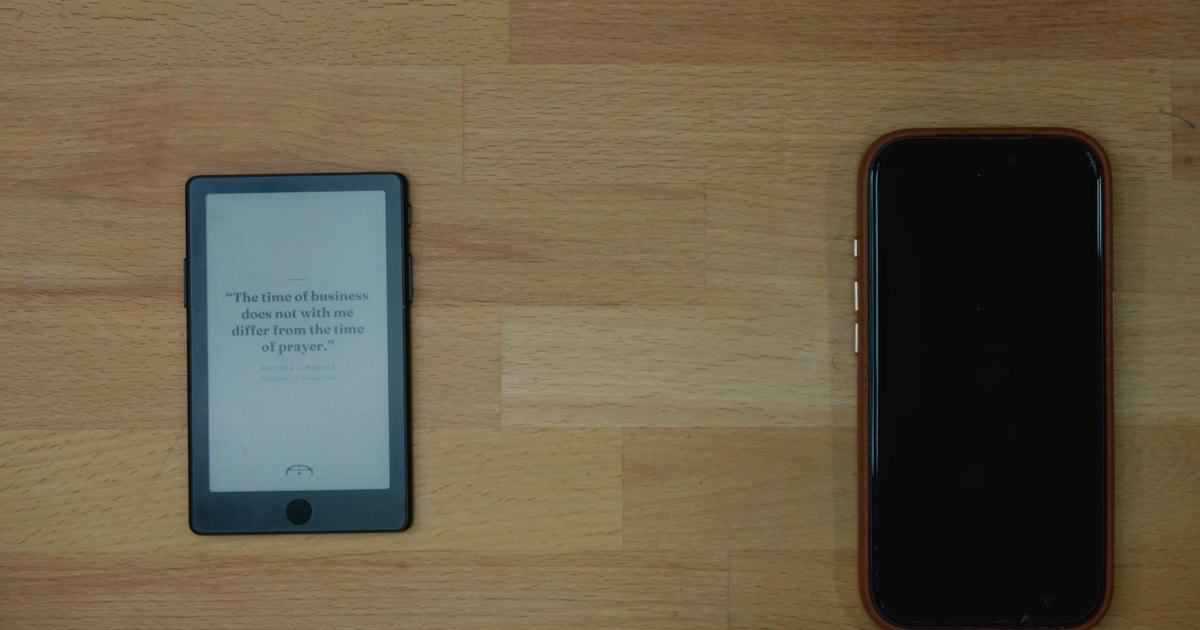
Xteink X4 Pro: Sending Articles to It With a Claude-Built App
The Xteink X4 Pro is a 72 gram E Ink reader that fits in a pocket, which is the one thing my Kindle does not do. Here is the article workflow I built around it, and why it is the reason the device stays with me.
Read →
Buffalo Leather vs Cowhide: $10 Cover vs Paper Republic
I compared a $10 full grain buffalo cover from MILITARIA STUFFS against covers from Paper Republic, Traveler's Company, and MeePlus. The buffalo cover is the toughest, but the Paper Republic still gets my pick.
Read →
Prime Day 2026 Stationery Deals: Live Price Tracker
Every pen, notebook, case and paper on my shelf, checked at each Amazon deal drop and judged against its own pre-sale price.
Read →
Are Field Notes Fountain Pen Friendly? Bleed and Ghosting Test
I wrote with my fountain pens on one Field Notes page to see which ones ghost and which ones bleed through.
Read →
Stationery Haul: Traveler's Company, Iroshizuku Ink and Midori MD
What I picked up at Two Hands Paperie in Boulder, plus a few stationery finds from Europe.
Read →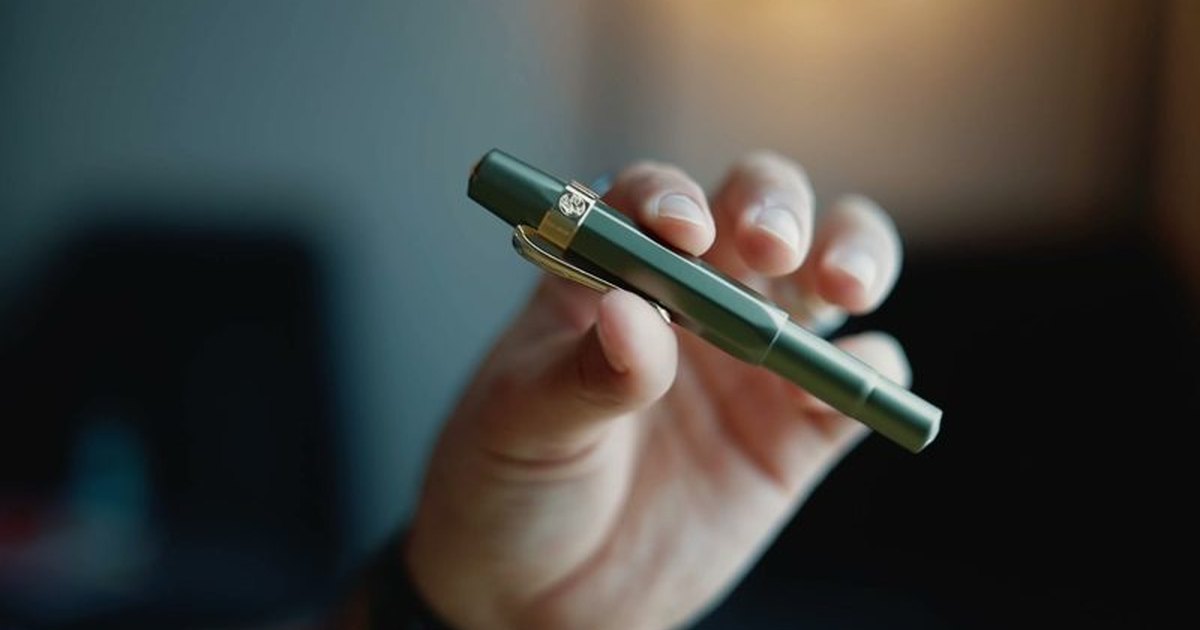
How to Swap a Fountain Pen Nib: Kaweco Sport, Liliput, Traveler's
I've got a ton of questions about how I swapped the nib on this Traveler's Company fountain pen or one of these Kaweco nibs.
Read →
Traveler's Notebook vs Sterling Ink N1 Refills for 2026
After three years of Traveler's Company monthly and weekly refills, I switched to Sterling Ink N1 booklets for 2026. Here is how the two compare.
Read →
Field Notes Winter Edition Review: The 1943 Two-Way Memo Books
A first look at the Field Notes 1943 two-way memo books, stapled the short way.
Read →
How to Stay Organized Without Apps: Analog Planning for ADHD
For a long time I thought that more applications, more systems, more technology was the correct answer to solve some of these issues, but in reality it was just having the right practices, the right habits that helped me understand and process that anxiety and symptoms of ADHD that come with forgetfulness, with time blindness.
Read →
How to Journal Consistently: My Analog Journaling System
You're probably just like me and started one, two, three, four, five journals and have never finished them.
Read →
Techo Kaigi 2026: My Complete Analog Planner Setup
A planner, a pocket notebook system, and a memory keeper for 2026.
Read →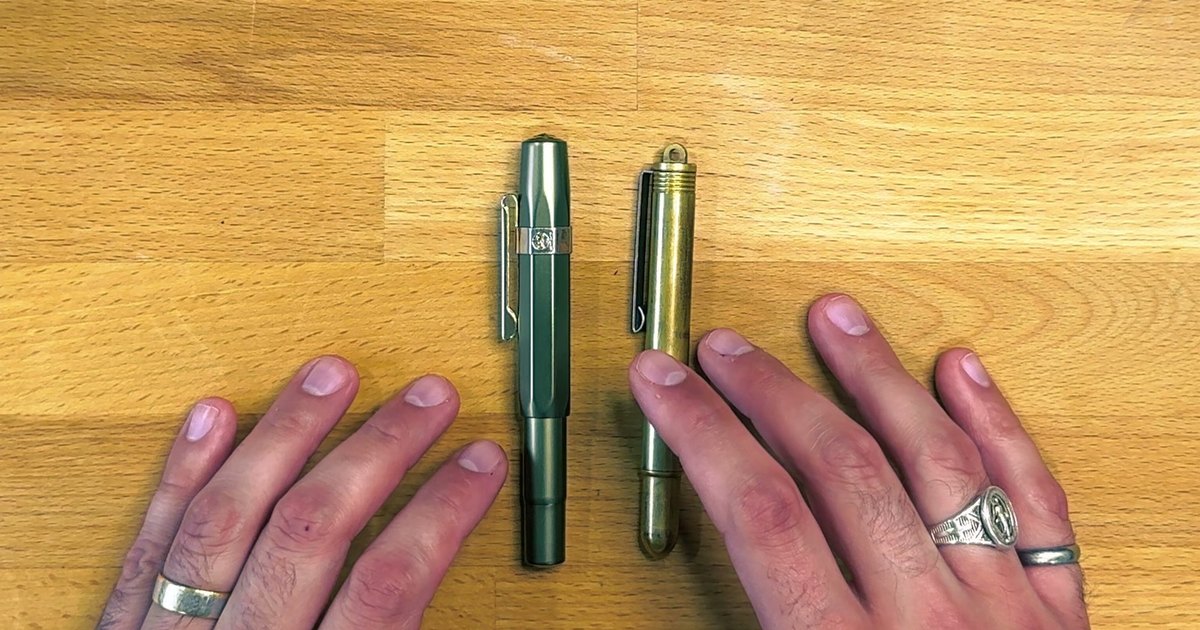
Kaweco Sport vs Traveler's Company Fountain Pen: My Pick
I haven't seen too many comparisons online, and these are my two daily drivers. Capped they're about the same length, but posted, the Traveler's Company pen is slightly more comfortable in the hand.
Read →
The Pocket Notebook Method: How to Remember What You Read
I switched to having just a simple pocket notebook to really process all these ideas. These are the three simple habits I use to retain what I read and watch.
Read →
The Best Pens Under $5: Five Gel and Rollerball Picks
Budget pens are something that is good to have around. If I were to pick just one pen to have a lot of the time, it would be the Zebra Sarasa Clip.
Read →
LOCHBY Venture Pouch Review for Tech and Stationery
This venture pouch has changed the way I carry my stationery, tech, and everything. Being able to carry stationery and pens on one side and all my tech on the other is what unlocked it for me.
Read →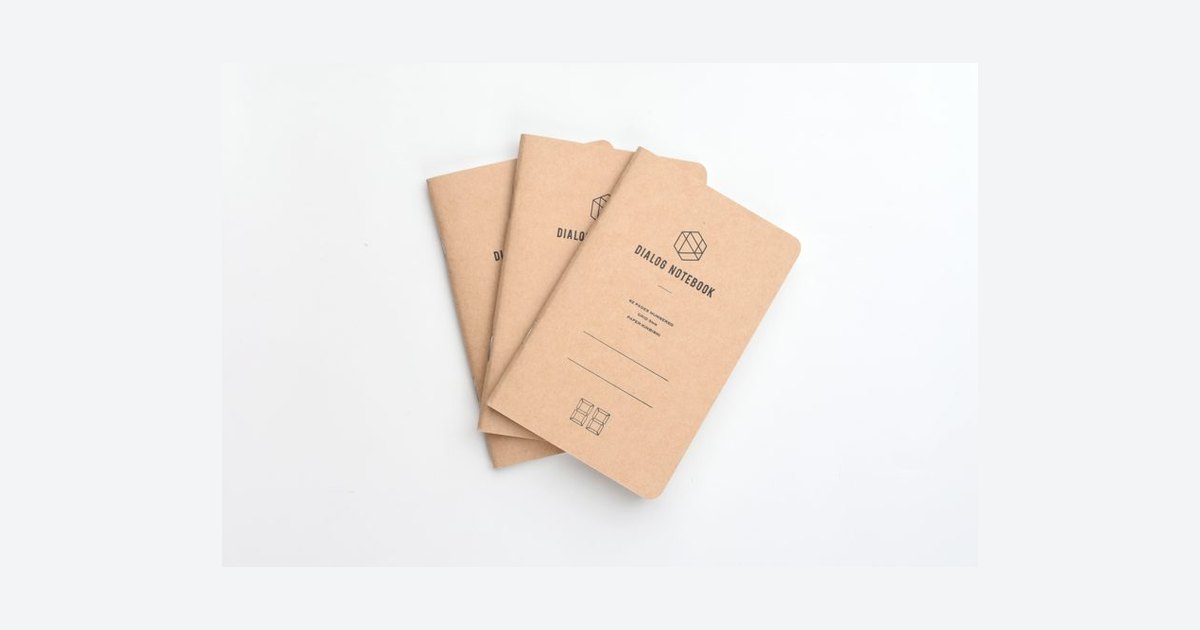
Field Notes vs LOCHBY vs Dialog Notebook: What I Use Each One For
Field Notes are definitely my favorite. I use different notebooks for a few different jobs.
Read →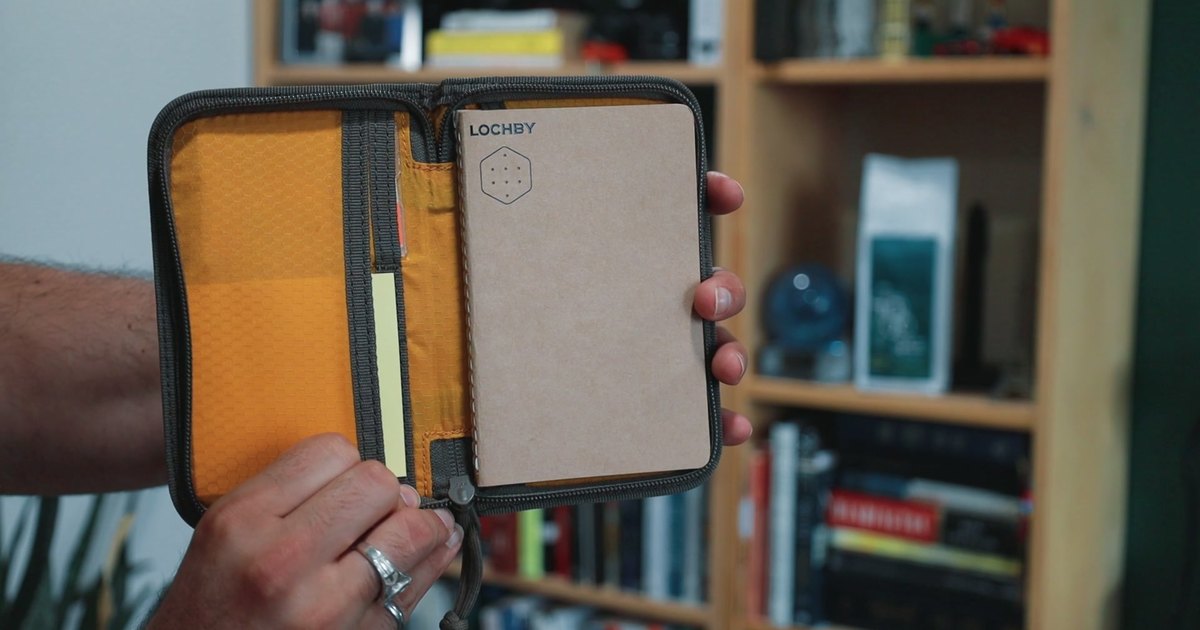
Analog Tools That Help Me Survive a Digital Desk Job
It's not about replacing all the digital tools with analog tools. It's finding the places where you notice some things are starting to break, and for me that was the constant switching on one screen.
Read →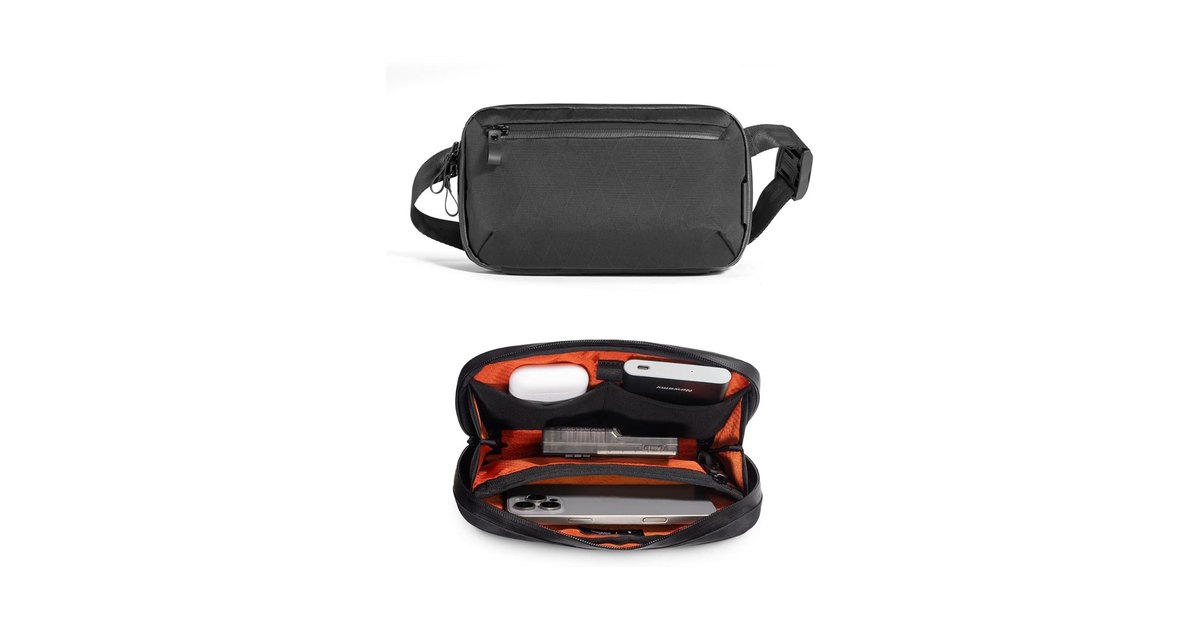
Travel Stationery Pouch: Inside My ALPAKA Tech Case
My journaling kit lives in an ALPAKA tech case. It's not designed for stationery, but honestly, it fits everything I need.
Read →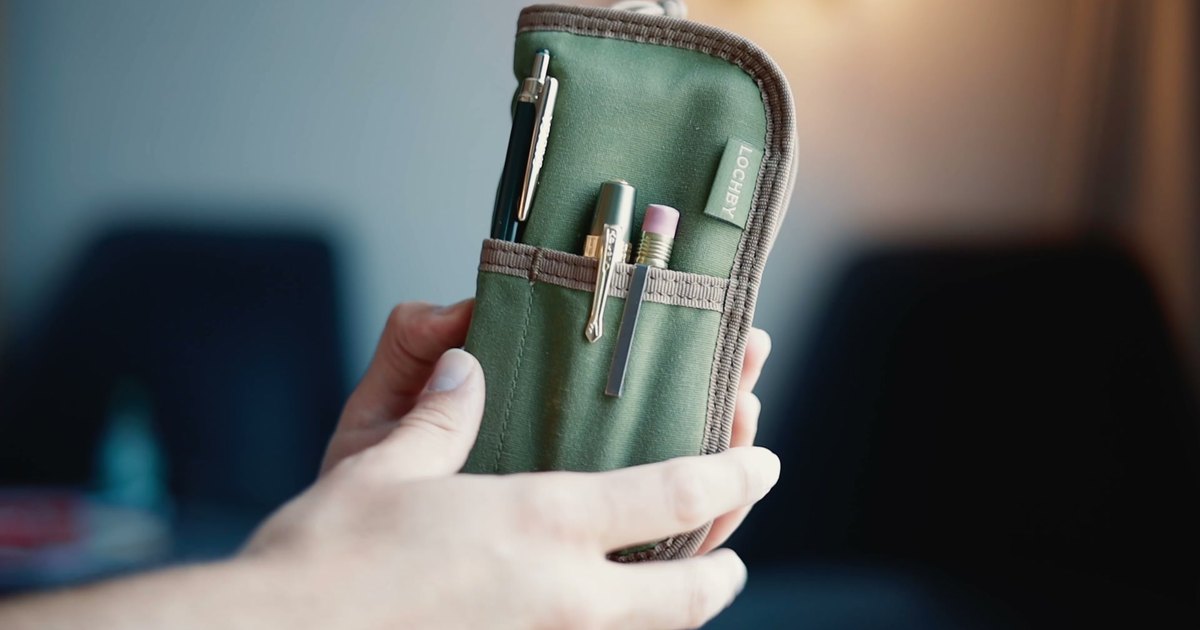
What's in My LOCHBY Quattro Pen Pouch for Everyday Carry
I want to walk you through what I keep in my pen pouch as well as my extended stationery. I see some redundancies currently, and I want to make sure I fix those.
Read →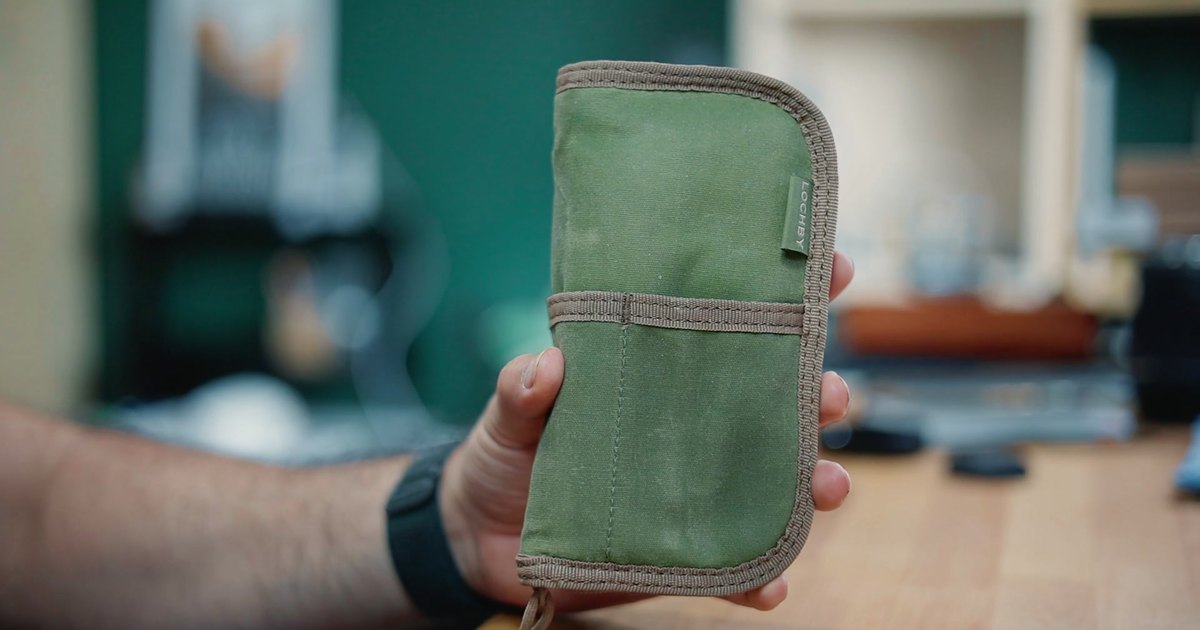
LOCHBY Quattro, Voyager and Mini Field Journal Review
I just really enjoy the products, and this green colorway really caught my eye, and I wanted to give it a go.
Read →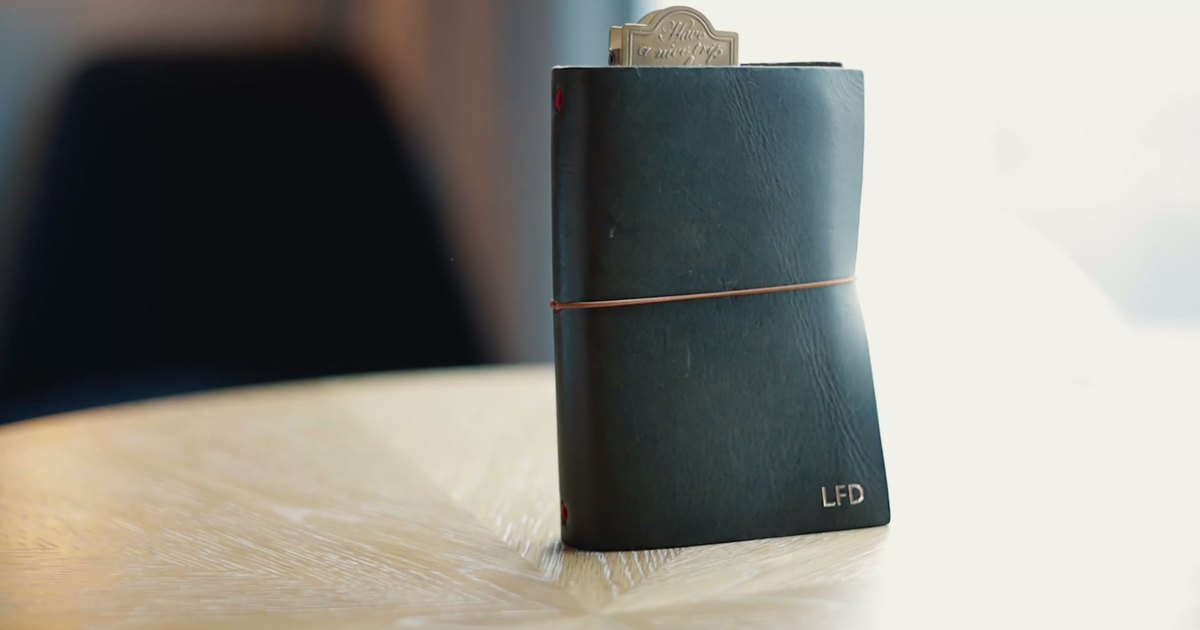
Paper Republic Grand Voyageur Pocket Review After Two Months
Why I moved from the Traveler's Company Passport to the Paper Republic Grand Voyageur Pocket, and the three-notebook Field Notes system I carry in it.
Read →
One-Backpack Travel Stationery Kit: What I Actually Carry
When I travel, I like to travel super light, so I don't have a checked bag or any big carry-on with me.
Read →
How to Set Up a Pocket Notebook You Will Actually Use
The things that I like to do right away to pick a new notebook, and some of the things I like to set up at the beginning.
Read →
Pocket Notebook Ideas: How I Use Field Notes Every Day
Different ways that you can utilize your pocket notebook, what my setup looks like, and some of the things that you can do to improve your own setup.
Read →
Stationery Gifts for Dads Who Plan: An Analog EDC Gift Guide
A gift guide focusing on stationery and analog tools that really make my life, my personal life, a lot better.
Read →
Paper Republic vs Traveler's Notebook: Pocket Journal Comparison
The Paper Republic Grand Voyageur Pocket and the Traveler's Company Passport, compared on size, closure, leather, capacity and paper.
Read →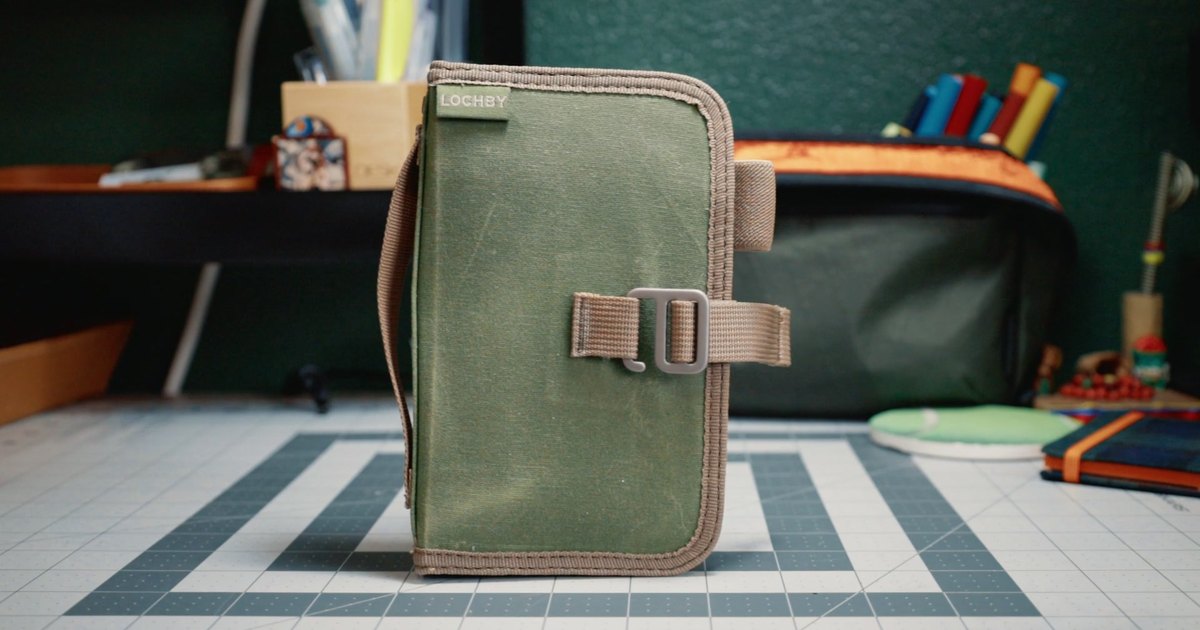
Pocket Notebook Covers: 7 I Have Carried and What Each Is For
The Paper Republic Grand Voyageur in the pocket size is my favorite pocket notebook cover. Here is what the other six covers ended up being for.
Read →
Best Field Notes Alternatives for Fountain Pen Users
Field Notes are my favorite pocket notebook, but the paper is not the most fountain pen friendly. The Dialog Notebook and the LOCHBY Pocket Journal are the two alternatives I would pick.
Read →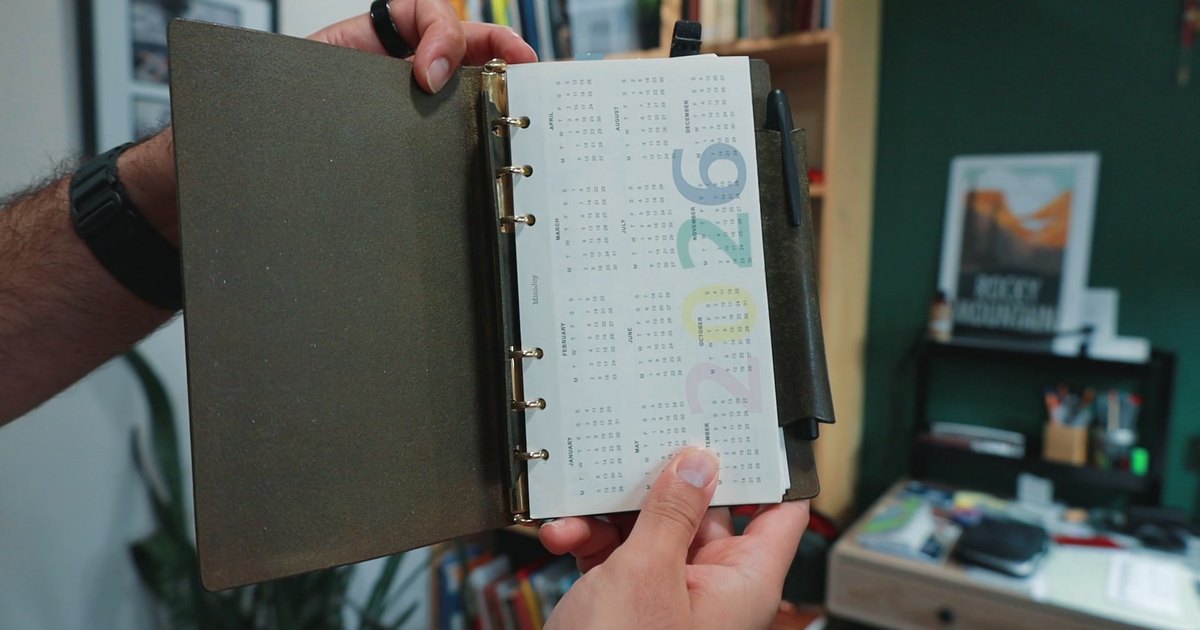
A Weekly Review on Paper: The 7-Move System That Works
If there's one thing I can point to for my success, it's having a consistent routine I can do week after week. This is that routine, on one printed page.
Read →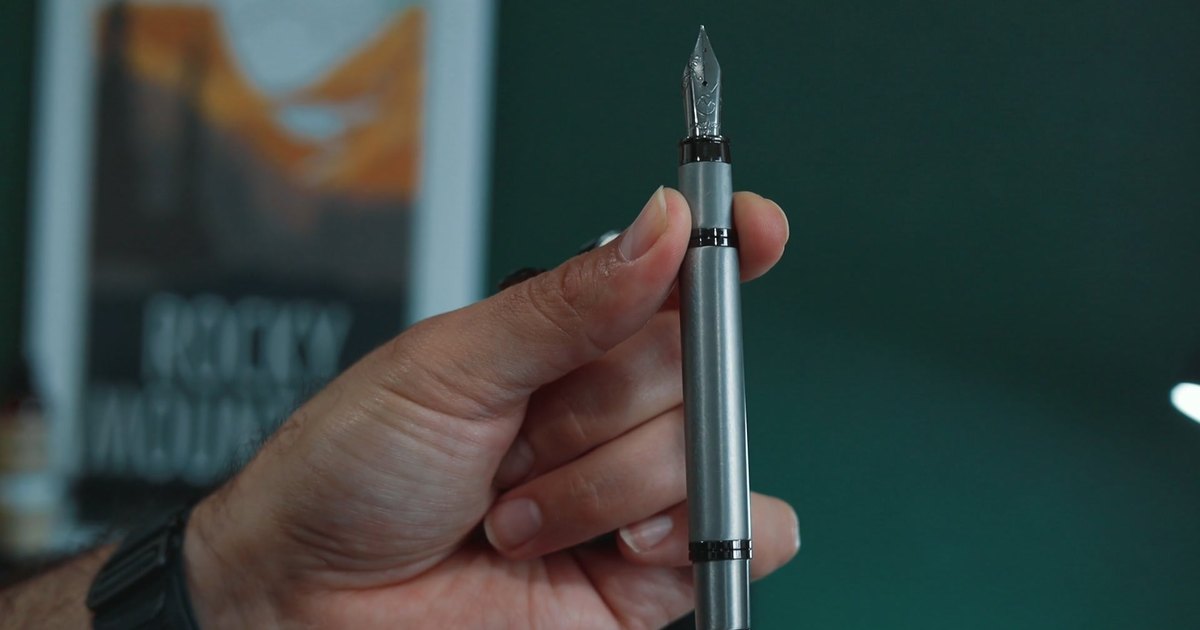
Monteverde Innova Ti Review: Titanium Pen for Daily Carry
All of these pens write the same, but one of them has really caught my attention lately, and it's this Monteverde Ti and I want to talk to you about it.
Read →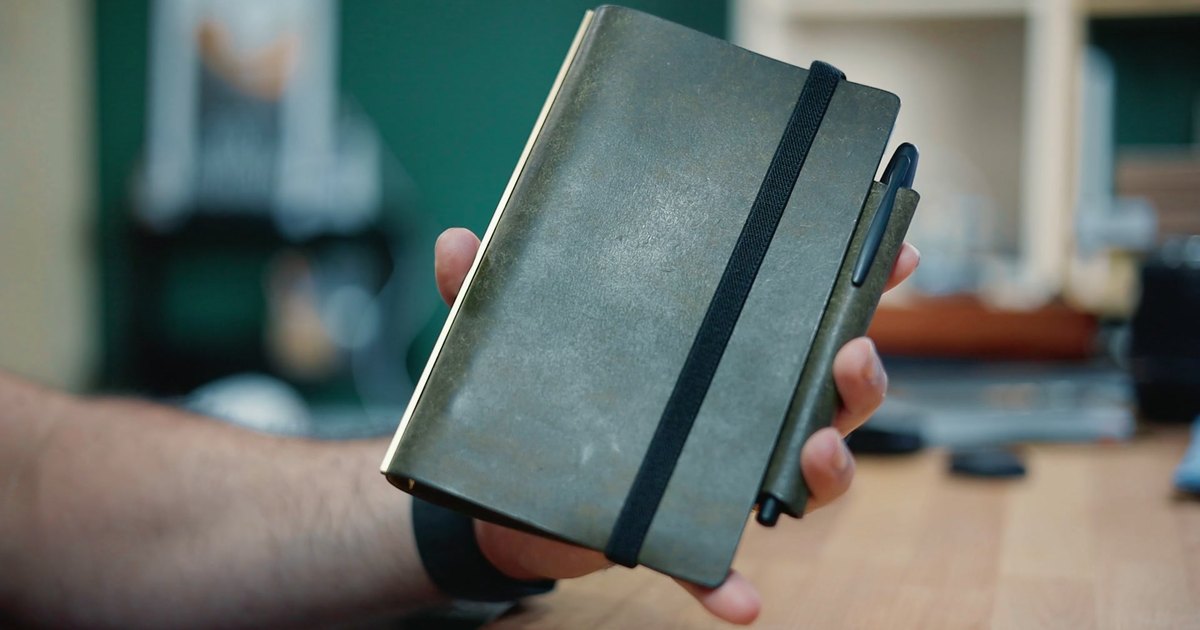
Best Ring Planner Inserts: The Ones I Print for MeePlus
Print-your-own six-ring inserts are the ones I actually use. They go in a MeePlus SlimPad, personal size. They do not drop into a Lochby or a Traveler's Company notebook.
Read →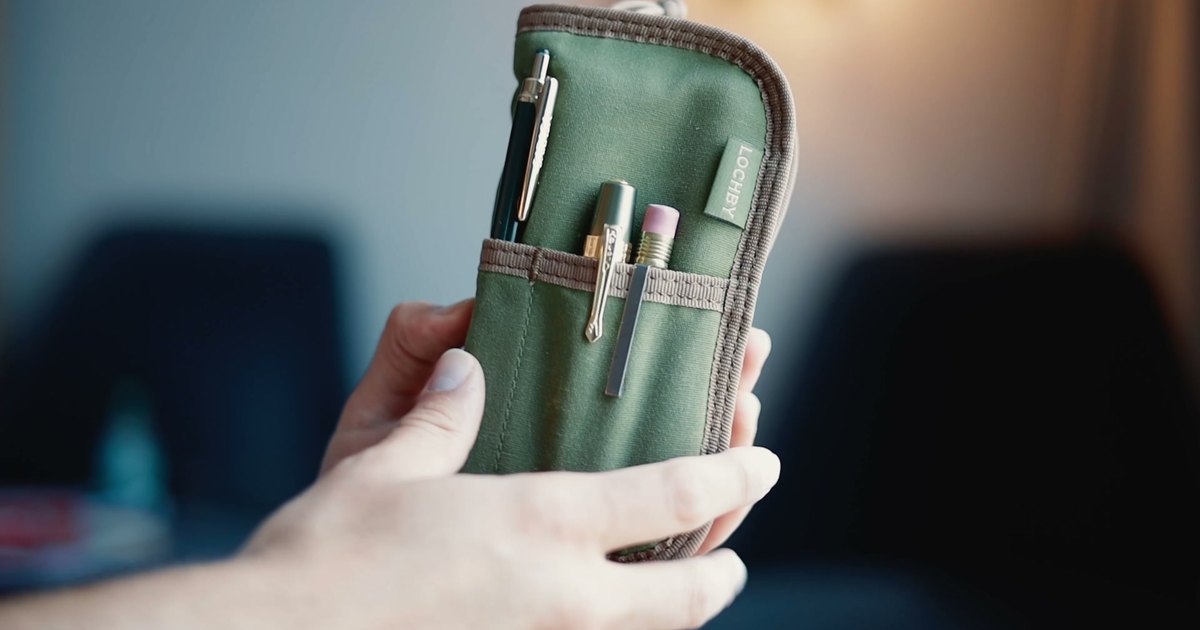
Pocket Pen Case Setup: Every Tool I Carry Daily
Every tool in one pouch, and it still fits in a pocket. Here is exactly what is inside my daily pen case and why each piece earned its spot.
Read →
What I Actually Carry My EDC Stationery In (And Why)
For most days I reach for the Aer Day Sling 4 Max because it is the only bag that fits my full stationery kit and an iPad Pro without turning into a brick. When the iPad stays home, a Peak Design Field Pouch does the job in half the space.
Read →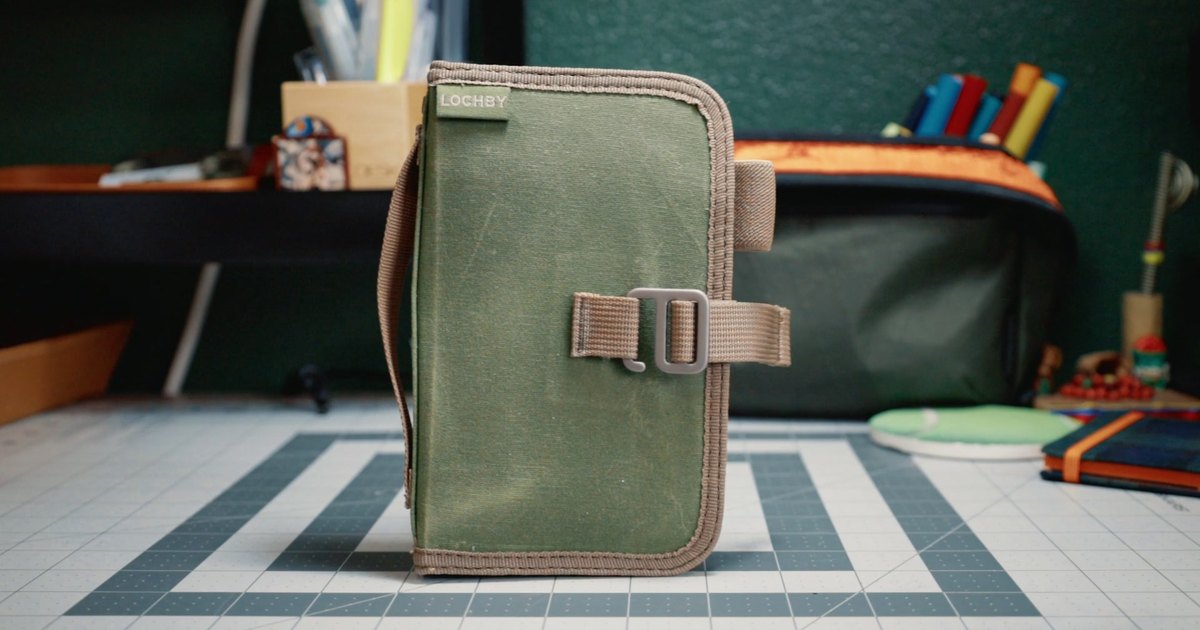
Lochby Mini Field Journal vs. Paper Republic Grand Voyageur
I carried the Lochby Mini Field Journal for several months. Field Notes inside, a four-notebook system, and it worked. Then I switched to the Paper Republic Grand Voyageur in pocket size, and the reason had nothing to do with which one is better made.
Read →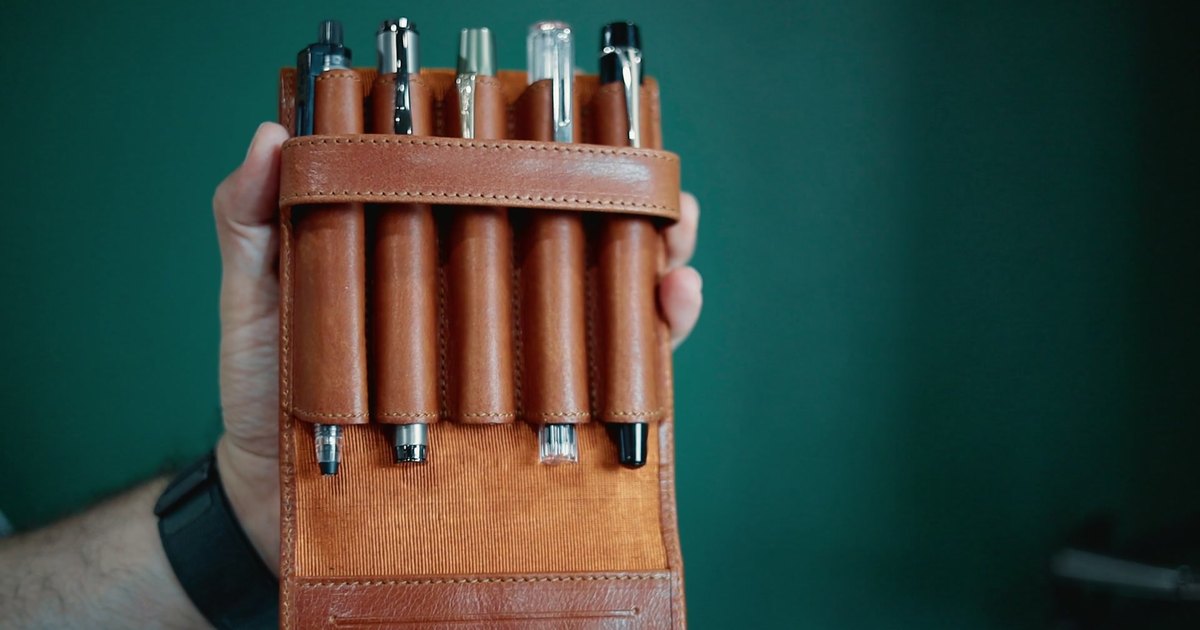
Galen Leather TwinFlip Review: Is the $85 Pen Case Worth It?
After a week of daily use, the Galen Leather TwinFlip earns its price if you actually care about the leather. If you just need to move five pens around without babying them, cheaper cases will do the job fine.
Read →
Why I Switched to a Ring Planner (And What It Fixed)
I spent years cycling through bound notebooks trying to make them fit a system that kept changing shape. A ring binder finally let the paper move instead of me.
Read →
Two Fountain Pens, One Journal: My Daily Conklin Setup
I run two Conklin fountain pens in one Traveler's Company notebook for daily journaling, no app, no template. Here's why two pens beat one, and which ink goes with which.
Read →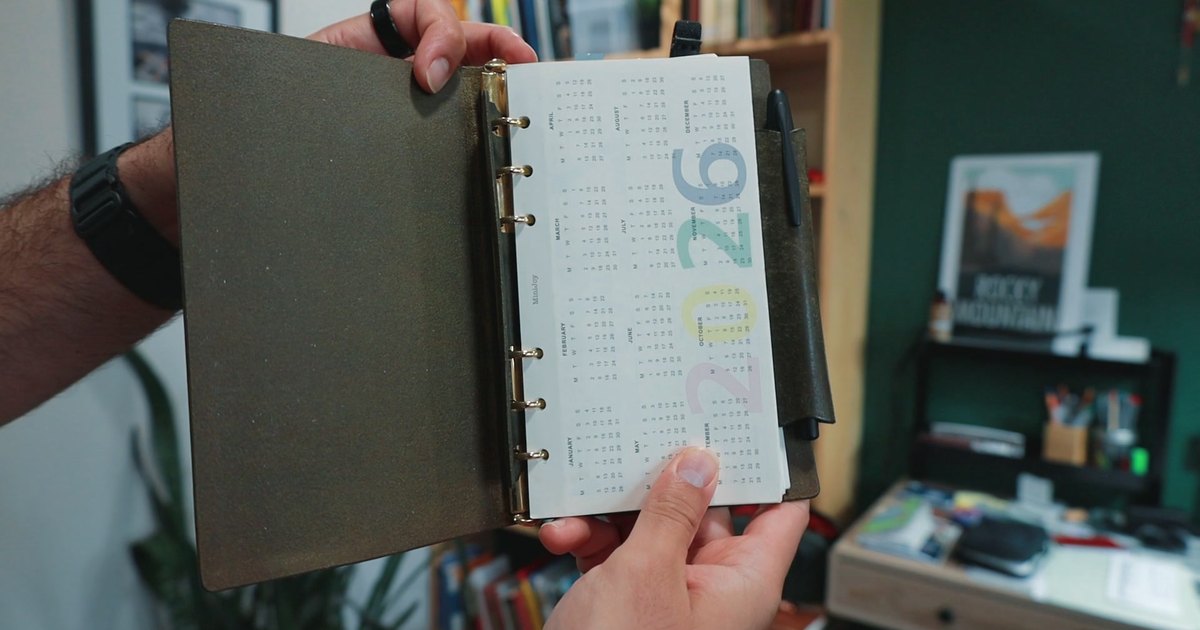
Techo Kaigi 2026: What I Cut From My Planner Lineup
Six months into 2026, I sat down for a techo kaigi, the Japanese planner meeting with yourself, and cut two systems that weren't earning their spot. Here's what stayed, what got cut, and why.
Read →
The Best Paper for Fountain Pens, Tested
I don't run a lab test on paper. I put a group of fountain pens on one page, turn it over, and keep using the notebook. This is what that has shown me about the papers I write on.
Read →
My Everyday Carry Setup: Aer Day Sling 4 Max Review
After months of rotating between a Peak Design Field Pouch and this six-liter sling, the Aer Day Sling 4 Max is what actually leaves the house with me most days, because it's the only bag that holds my full stationery kit and an iPad Pro without forcing a tradeoff.
Read →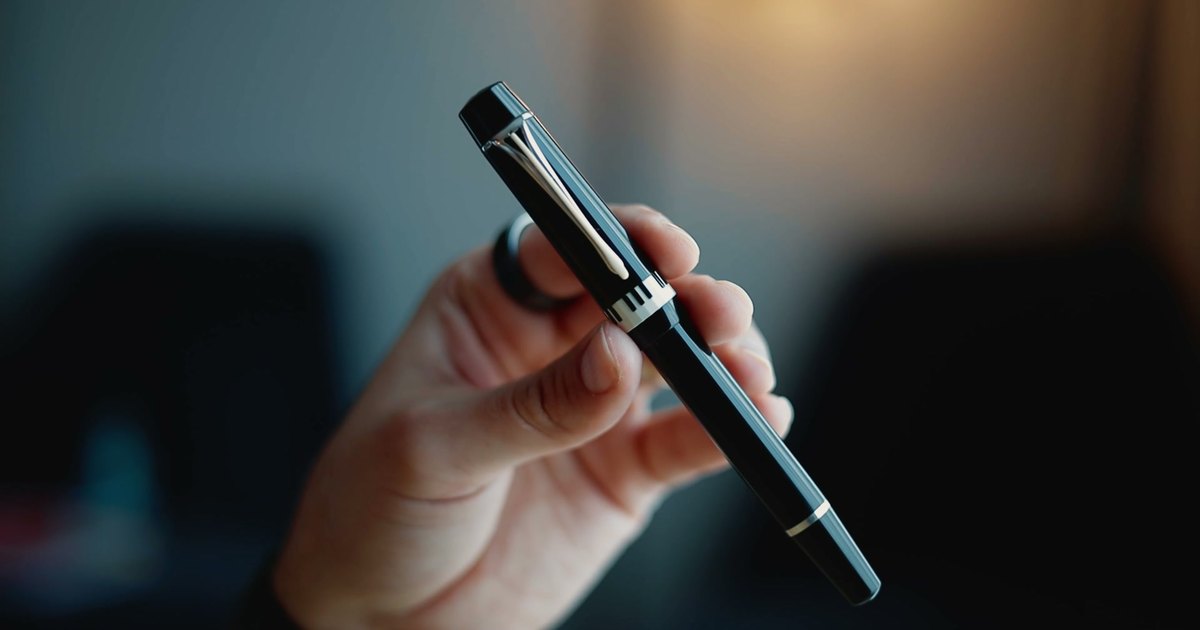
The 10 Pens I Actually Reach for Every Day (Ranked by Use)
I ranked every pen in my Lochby Quattro by how often I actually pick it up, not by what it cost. The most expensive one in the pouch didn't come close to the top.
Read →
Analog Planning With ADHD: Why Paper Holds What My Brain Drops
Why paper externalizes working memory, why simpler systems survive, and the analog tools that actually stuck for a working bridge engineer with ADHD and time blindness.
Read →
How to Set Up a Ring Planner Without Overbuying
A calm, no-overwhelm setup: pick a size, build a five-insert core, run a one-page index, and add nothing until you miss it.
Read →
How to Print Planner Inserts at Home Without Wrecking the Margins
Print planner inserts at true size: the one printer setting that ruins them, the right paper weight, and how to trim and punch clean pages that fit your rings.
Read →
Why Fountain Pen Ink Bleeds Through Planner Paper, and How to Stop It
Why fountain pen ink feathers, bleeds or ghosts on some planner paper and not others, and what stops it: the right nib and ink, or paper made for fountain pens.
Read →
Planner Insert Sizes Explained: A5, Personal, Pocket, and the Rest
Exact dimensions for all six ring sizes, why the names make no sense, and how to pick the one you'll actually carry.
Read →
Best Pocket Notebook for Everyday Carry? I Carry Three Instead
One notebook can't do the job. The three-tool analog carry I actually use: Field Notes, a MeePlus binder, and a Traveler's Company notebook.
Read →
Analog vs Digital Productivity: Why You Don't Have to Choose
Stop picking a side. Split your tools by the job, not by loyalty: what to keep on paper, what belongs in an app, and why switching tools isn't failure.
Read →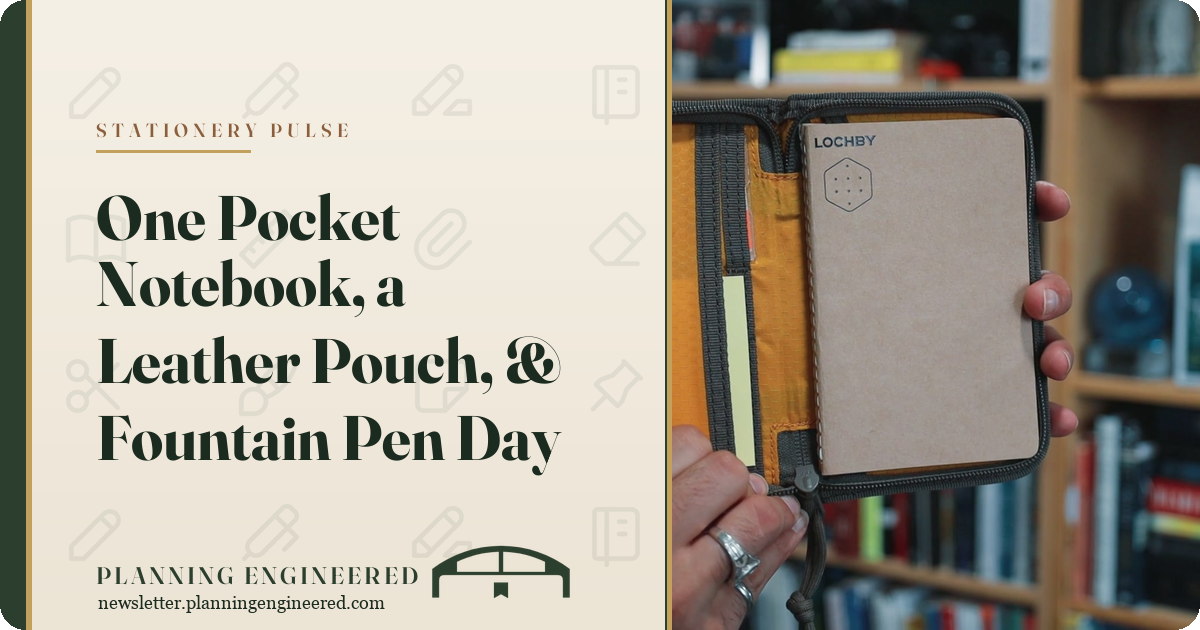
Stationery Pulse: One Pocket Notebook, a Leather Pouch, and Fountain Pen Day
New here? The Stationery Pulse is a short weekly letter for people who still think on paper. Every Monday I round up what's worth reading in the analog world: pens, notebooks, planners, and the people using them well, then close with whatever's new from Planning Engineered. The full gear catalog lives on the Shelf, linked at the bottom. One letter, once a week. That's it. I'm still looking for a pocket-sized notebook that is more fountain pen friendly, but I do enjoy Field Notes quite a bit, just the way they look.
Read →
Techo Kaigi Is a Purpose Check
In July I held my mid-year techo kaigi and set my planner lineup against the one I started the year with. Techo kaigi is a Japanese planning term for a planner meeting, a lot of times with yourself. It doesn't really mean you're throwing everything overboard every six months. The planner, and why it moved. In January my planner was Sterling Ink's N1-size monthly and weekly books, carried in the Lochby Voyager cover. That system was probably the one that had stayed most consistent for me.
Read →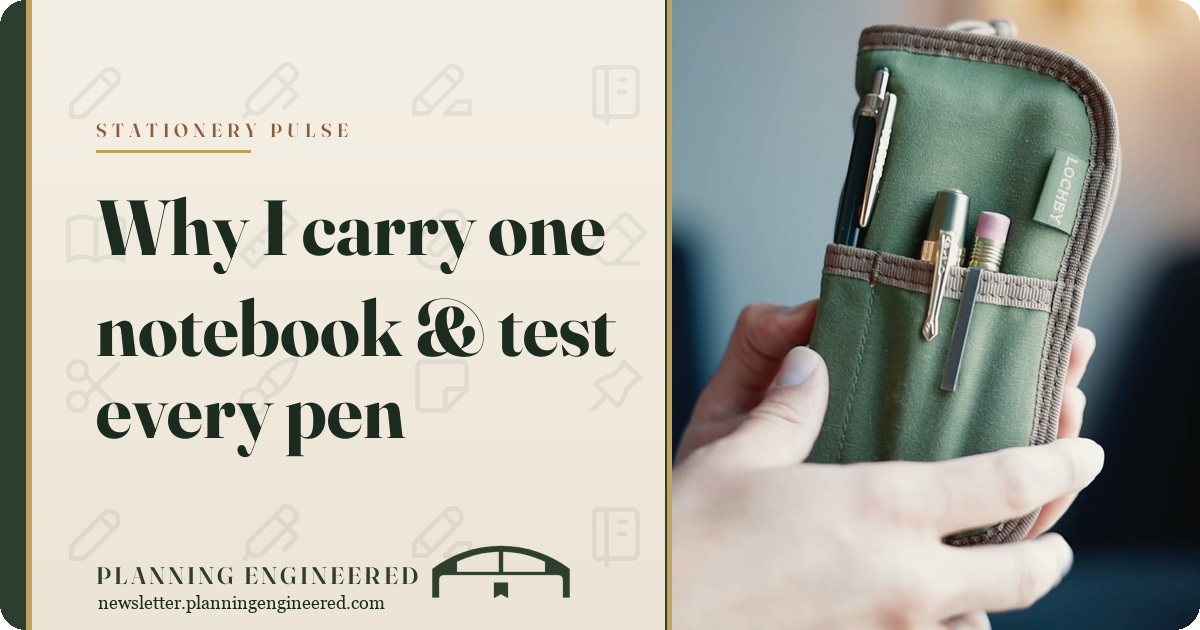
Stationery Pulse: Why I carry one notebook and test every pen
New here? The Stationery Pulse is a short weekly letter for people who still think on paper. Every Monday I round up what's worth reading in the analog world: pens, notebooks, planners, and the people using them well, then close with whatever's new from Planning Engineered. The full gear catalog lives on the Shelf, linked at the bottom. One letter, once a week. That's it. I don't need my big planner to know when it's the next birthday or when is the next trip.
Read →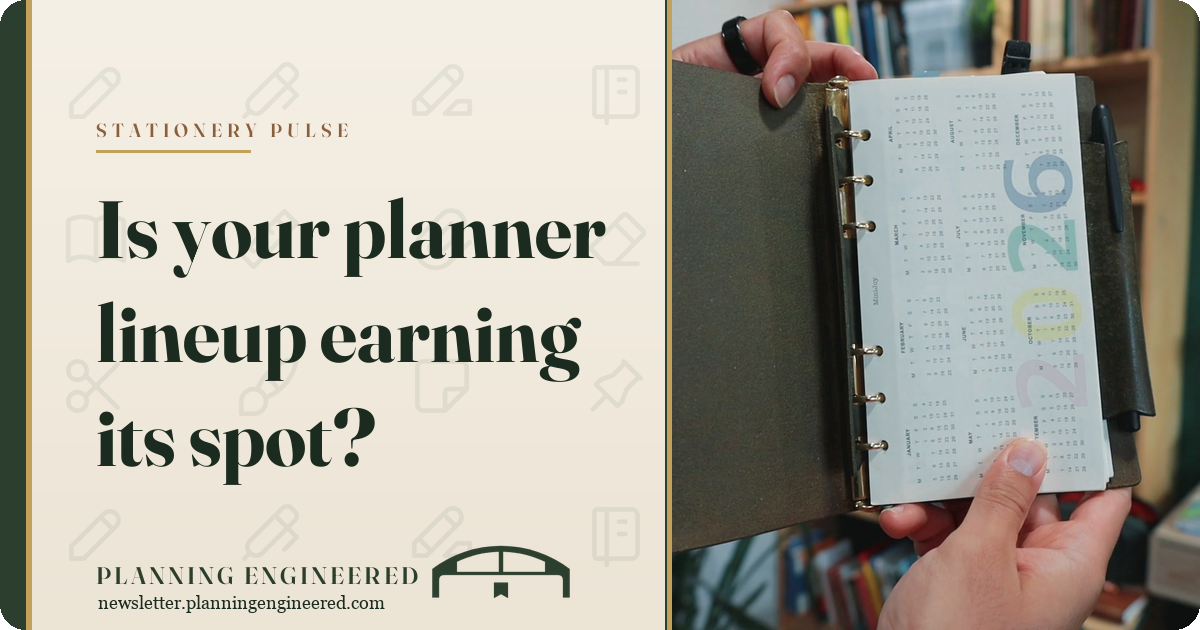
Stationery Pulse: Is your planner lineup earning its spot?
New here? The Stationery Pulse is a short weekly letter for people who still think on paper. Every Monday I round up what's worth reading in the analog world: pens, notebooks, planners, and the people using them well, then close with whatever's new from Planning Engineered. The full gear catalog lives on the Shelf, linked at the bottom. One letter, once a week. That's it. I want my tools to look nice, which is a big reason I buy some of them, but I also want them to function the way they need to and serve the purpose I intend.
Read →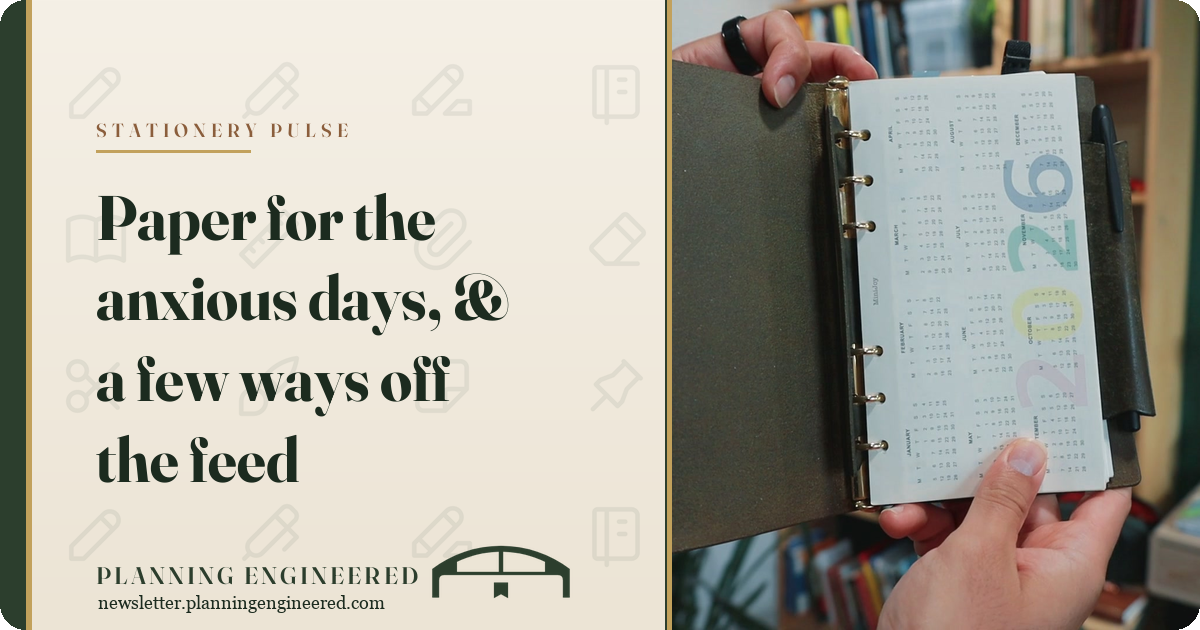
Stationery Pulse: Paper for the anxious days, and a few ways off the feed
New here? The Stationery Pulse is a short weekly letter for people who still think on paper. Every Monday I round up what's worth reading in the analog world: pens, notebooks, planners, and the people using them well, then close with whatever's new from Planning Engineered. The full gear catalog lives on the Shelf, linked at the bottom. One letter, once a week. That's it. One of the things I've learned over the years is that when I'm feeling extra anxious, extra worried, or just struggling to get through the day, using stationery is a great way to manage some of the symptoms.
Read →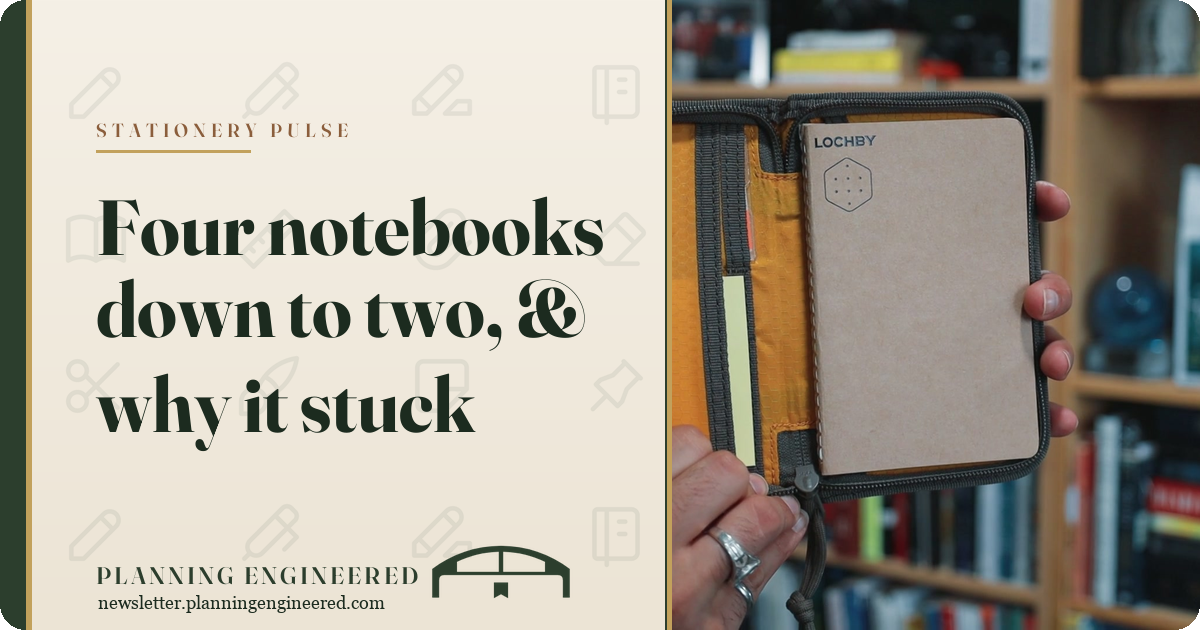
Stationery Pulse: Four notebooks down to two, and why it stuck
New here? The Stationery Pulse is a short weekly letter for people who still think on paper. Every Monday I round up what's worth reading in the analog world: pens, notebooks, planners, and the people using them well, then close with whatever's new from Planning Engineered. The full gear catalog lives on the Shelf, linked at the bottom. One letter, once a week. That's it. I went from a four-notebook Field Notes system, which I shared in a video early in the year, to a two-notebook system: one a catch-all general-purpose notebook, the other a collection of the things I want to keep long-term.
Read →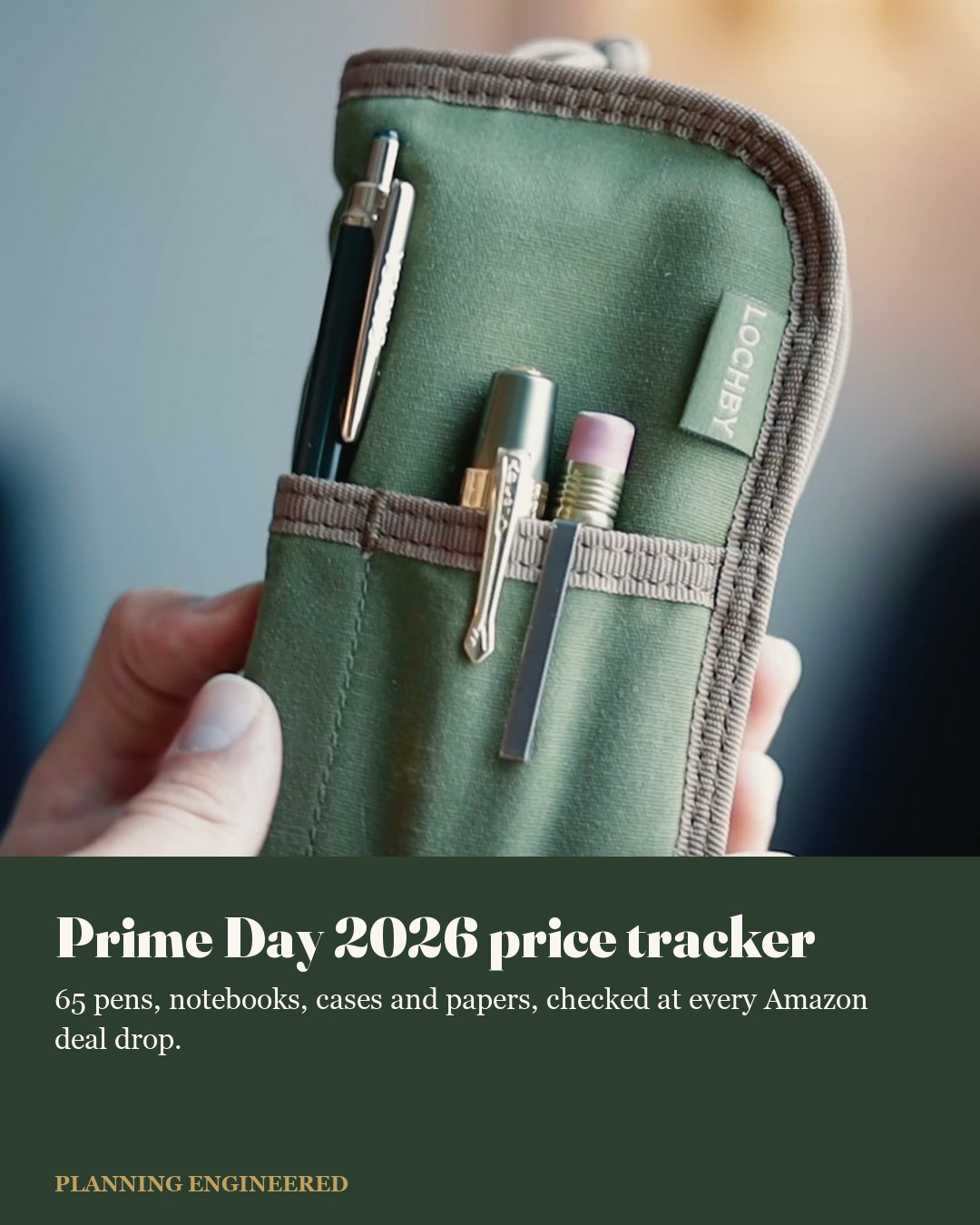
Prime Day 2026: the stationery deals that are actually real
Prime Day opened at 12:01 a.m. Pacific. I built a tracker for it, because most of what gets called a deal this week is not one. I'm checking 122 pens, notebooks, cases and papers from my shelf at every Amazon deal drop. A deal only counts if it beats the lowest price that exact listing had from October 1 to 5. A markdown measured against a List Price does not count on its own. ALPAKA HUB Pouch Pro : A small EDC pouch in green Axogrid 300D with YKK zippers, six interior slip pockets and five elastic loops.
Read →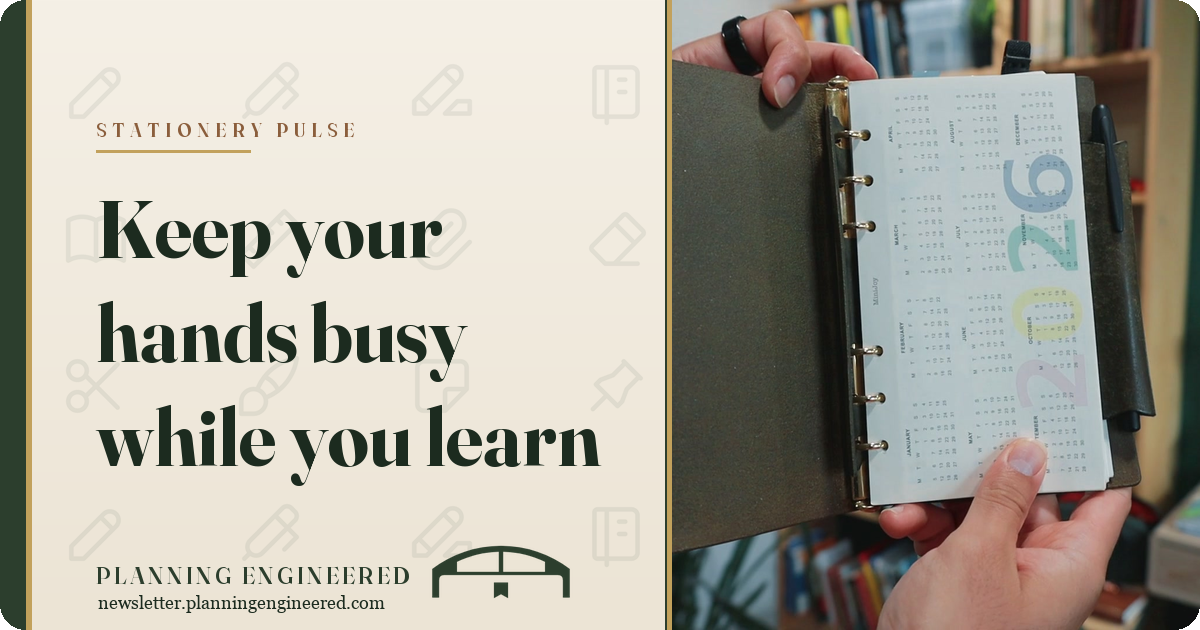
Stationery Pulse: Keep your hands busy while you learn
New here? The Stationery Pulse is a short weekly letter for people who still think on paper. Every Monday I round up what's worth reading in the analog world: pens, notebooks, planners, and the people using them well, then close with whatever's new from Planning Engineered. The full gear catalog lives on the Shelf, linked at the bottom. One letter, once a week. That's it. If I'm watching a video, I'm constantly writing down notes, bullet points, and lists, creating diagrams, making sketches, anything that keeps my hands busy while I'm learning.
Read →
How to Pick the Right Insert Size for Your Planner
A reader who bought the Complete Set asked whether the Personal size was included. They had the files downloaded already and could not tell. Personal size paper measures 95 by 171 millimeters, and hardly anyone carrying a Personal binder knows that number. Personal is in the set, and so is every other ring size, but the question underneath that one is the better question. There are different brands that use different naming conventions for a lot of these products. Some of them call Personal "Bible." Plotter uses its own set of names.
Read →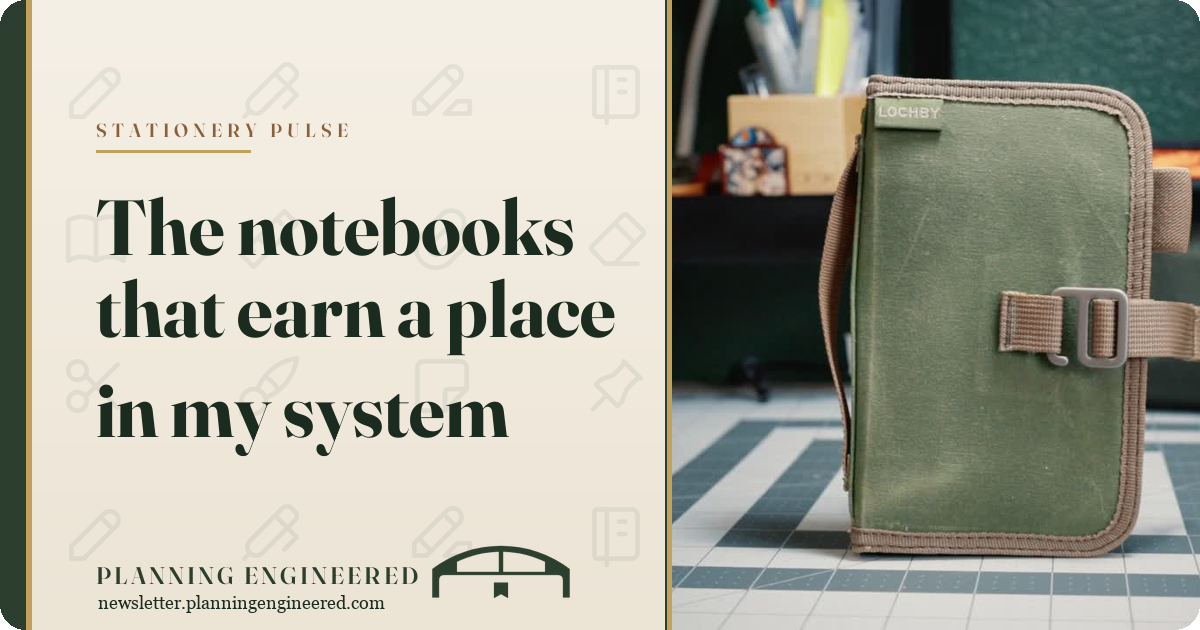
Stationery Pulse: The notebooks that earn a place in my system
New here? The Stationery Pulse is a short weekly letter for people who still think on paper. Every Monday I round up what's worth reading in the analog world: pens, notebooks, planners, and the people using them well, then close with whatever's new from Planning Engineered. The full gear catalog lives on the Shelf, linked at the bottom. One letter, once a week. That's it. I try to rotate between the Paper Republic and the LOCHBY Mini Field Journal, if not every day, to make sure they are not just sitting on the shelf and gathering dust.
Read →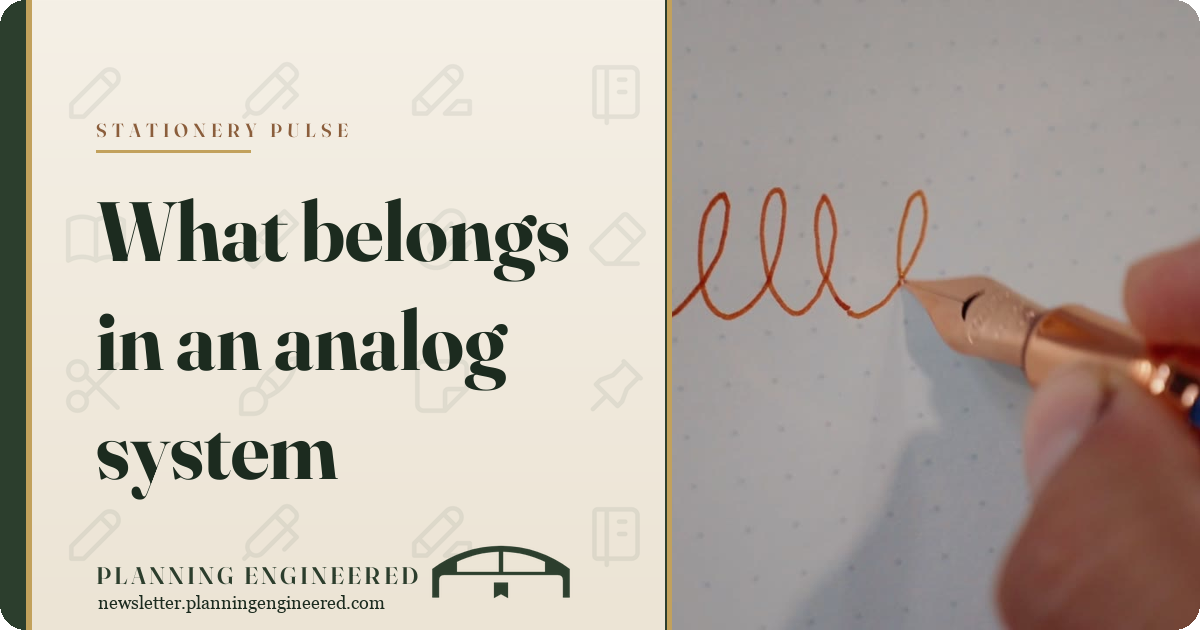
Stationery Pulse: What belongs in an analog system
New here? The Stationery Pulse is a short weekly letter for people who still think on paper. Every Monday I round up what's worth reading in the analog world: pens, notebooks, planners, and the people using them well, then close with whatever's new from Planning Engineered. The full gear catalog lives on the Shelf, linked at the bottom. One letter, once a week. That's it. The planning system itself has stayed very consistent, even though I did stop using the Sterling Ink planners. I've started to take a look at my whole system and make sure everything fits in its place.
Read →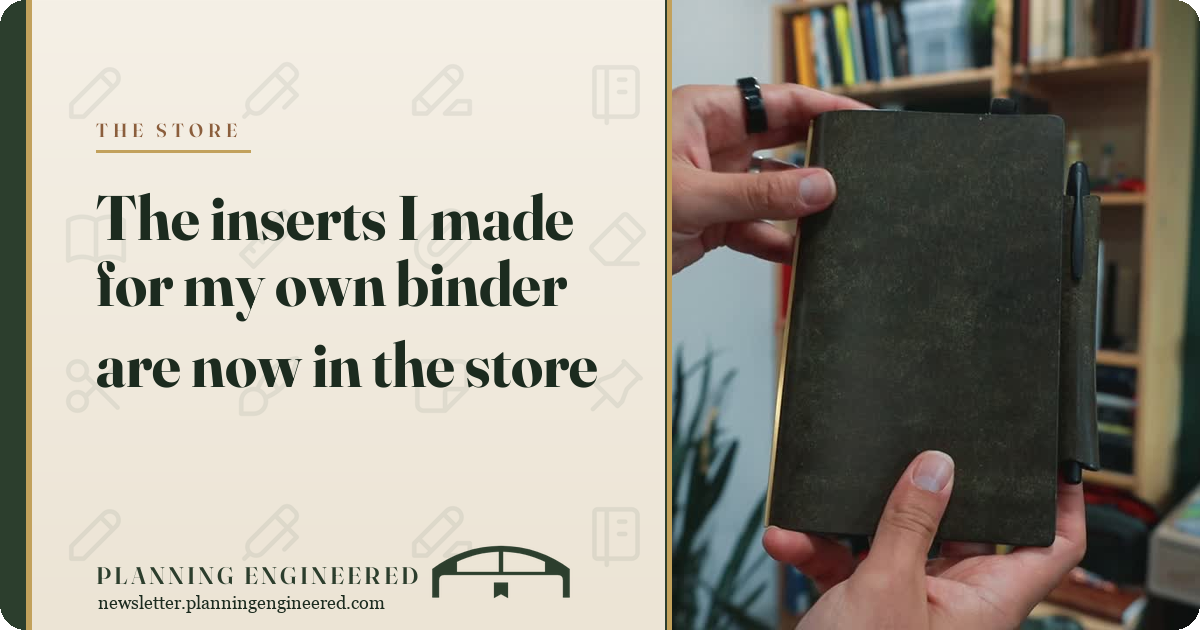
The inserts I made for my own binder are now in the store
Some of the things I struggled with most in bound planners were not being able to move pages as things changed, and not knowing how many pages to leave for a list or project. And one of the reasons the rings have worked well is I'm able to create my own inserts. I'm able to print them and change them every week if I need to. I started just creating them for myself, but I see a lot of value in sharing them with all of you. I'm very proud of how they turned out. They have been a great addition to my MeePlus binder system that I can create and redo and make my own.
Read →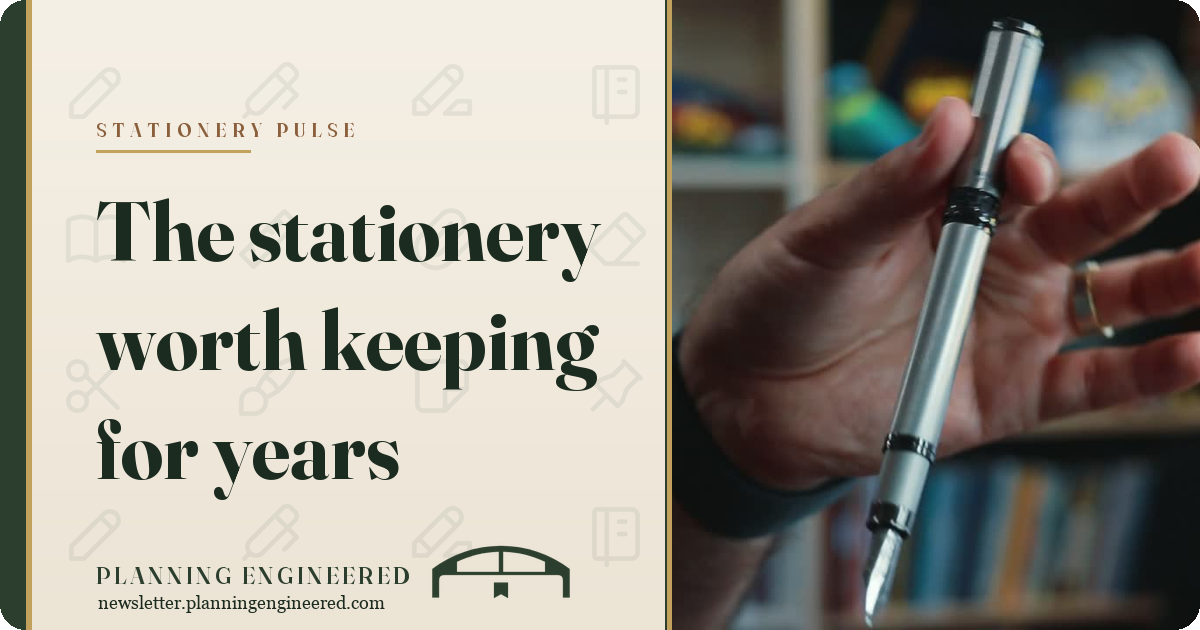
Stationery Pulse: The stationery worth keeping for years
New here? The Stationery Pulse is a short weekly letter for people who still think on paper. Every Monday I round up what's worth reading in the analog world: pens, notebooks, planners, and the people using them well, then close with whatever's new from Planning Engineered. Everything I have tested lives on the Shelf, linked at the bottom. One letter, once a week. That's it. There’s a benefit to choosing a high-quality cover you’re going to enjoy using, and taking a little more care of it.
Read →
Stationery Pulse: Does the TwinFlip really hold five pens?
New here? The Stationery Pulse is a short weekly letter for people who still think on paper. Every Monday I round up what's worth reading in the analog world: pens, notebooks, planners, and the people using them well, then close with whatever's new from Planning Engineered. Everything I have tested lives on the Shelf, linked at the bottom. One letter, once a week. That's it. Does this pen earn its daily use, or does it sit in the box because it looks like a collector piece?
Read →
Stationery Pulse: The Paper Test Every Fountain Pen Ink Has to Pass
New here? The Stationery Pulse is a short weekly letter for people who still think on paper. Every Monday I round up what's worth reading in the analog world: pens, notebooks, planners, and the people using them well, then close with whatever's new from Planning Engineered. Everything I recommend lives on the Shelf, linked at the bottom. One letter, once a week. That's it. Are Field Notes fountain pen friendly?
Read →
Stationery Pulse: The Case for Leather Pen Cases
New here? The Stationery Pulse is a short weekly letter for people who still think on paper. Every Monday I round up what's worth reading in the analog world: pens, notebooks, planners, and the people using them well, then close with whatever's new from Planning Engineered. One letter, once a week. That's it. If you leave your pens loose in your bag, your pocket, or on the desk, a leather case is going to be a great choice. This one is a five-pen case, and again, thank you to Galen Leather for sending this over for me to check out.
Read →
Stationery Pulse: DC Pen Show Season, and a Case That Holds Five Pens
New here? The Stationery Pulse is a short weekly letter for people who still think on paper. Every Monday I round up what's worth reading in the analog world, pens, notebooks, planners, and the people using them well, then close with whatever's new from Planning Engineered. One letter, once a week. That's it. Half the stationery world is at the DC Pen Show this week or writing about it. The recaps are worth reading before the next one lands. I spent my week with a five-pen case that actually protects what you put in it. That is rarer than it should be.
Read →
The Test Behind the Review
The two covers I cut for the mid-year review were the LOCHBY Voyager and the LOCHBY Mini Field Journal . Both great covers. I was just finding that the wax canvas, and specifically these covers, were a little larger than I wanted to carry around. The two that came out of the rotation. Both LOCHBY, both waxed canvas, both a size too big for how I actually carry. So I downsized the planner, which used to live in the Voyager.
Read →
Stationery Pulse: What I Cut From My Planner Lineup at Mid-Year
New here? The Stationery Pulse is a short weekly letter for people who still think on paper. Every Monday I round up what's worth reading in the analog world: pens, notebooks, planners, and the folks using them well, then close with whatever's new from Planning Engineered. One letter, once a week. That's it. Mid-year is when I actually admit which planners aren't earning their spot on the desk, and this week's video walks through the two I cut.
Read →
Stationery Pulse: Traveler's Caravan turns 20, plus a steel flex nib worth it
New here? The Stationery Pulse is a short weekly letter for people who still think on paper. Every Monday I round up what's worth reading in the analog world: pens, notebooks, planners, and the folks using them well, then close with whatever's new from Planning Engineered. One letter, once a week. That's it.
Read →
Stationery Pulse: Pen Show Recaps, a Leather Jacket, and My Top 10 Pens
New here? The Stationery Pulse is a short weekly letter for people who still think on paper. Every Monday I round up what's worth reading in the analog world, pens, notebooks, planners, and the folks using them well, then close with whatever's new from Planning Engineered. One letter, once a week. That's it. Pen show season is in full swing, with two solid recaps in this week's roundup if you couldn't make it out west. There's also a good case for treating watercolor as a journaling tool instead of fine art, worth a read if the medium has intimidated you.
Read →
Stationery Pulse: The Case for Owning Less
New here? The Stationery Pulse is a short weekly letter for people who still think on paper. Every Monday I round up what's worth reading in the analog world, pens, notebooks, planners, and the folks using them well, then close with whatever's new from Planning Engineered. One letter, once a week. That's it. Half of this week's roundup is people quietly admitting they own too much. Well-Appointed Desk is telling you to do less, Gare the Bear picked a top five instead of a top twenty, and AlexanderWrites named the five things he doesn't regret instead of the fifty he does. I like that shift.
Read →
Paper is for thinking. Digital is for storage.
Most arguments about productivity tools assume you have to pick a side. Notebook people distrust anything that syncs. App people think paper is a hobby. Every few months someone posts an "I switched from X to Y and my life changed" thread, as if the tool itself were the variable that mattered. It isn't. The variable that matters is what job you're asking the tool to do and most setups fail because one tool is doing two incompatible jobs at once. Here's what that looks like on a job site.
Read →
The gift guide for the dad who still carries a real pen
There’s a version of Father’s Day gift-giving that most people default to: something from Amazon’s trending list, something that seemed like a good idea in a browser tab at midnight, something forgettable by July. The problem isn’t the intention. It’s the framework. Most people pick gifts based on what they’d want, or what looks impressive at the price point, rather than asking the harder question: what would this person actually reach for, six months from now, when it’s cold out and their day is already too long? I think about this as an engineer. On job sites, you carry what earns its spot.
Read →
What a bridge engineer actually carries — and why it makes a better gift
Gift guides are mostly catalogues of things no one asked for. They're padded with whatever is trending, priced to hit algorithmic sweet spots, and written by people who have never used the items they're recommending. The recipient opens the box, says thank you, and the thing sits on a shelf. The problem isn't the price. It's that most guides optimize for easy browsing instead of actual use. The analog tools I carry daily earned their place through field conditions. A bridge inspection means job sites with greasy forms, cold mornings, and no surface worth writing on.
Read →The Screen That Holds Everything Is Holding You Back
The model is running. Two minutes until results load. I used to check email. Not because anything urgent was waiting. Because the inbox was one tab away, and two minutes felt like idle time. Then a calendar check. Then a Teams notification. By the time the results loaded, I'd switched contexts three times and lost the thread of the calculation I'd been building for forty minutes. That wasn't a bad day. That was every day. Here's the productivity trap nobody names: everything living on one screen sounds like efficiency. It destroys depth.
Read →The Analog Toolkit of a Working Engineer
Every day I sit at a computer, run engineering models, field calls from clients, and cycle through tabs — email, calendar, task manager, back to the model, repeat. Technology is my job. It’s also, increasingly, the thing making my job harder. When Everything Lives in One Place, Nothing Gets Done The promise of digital tools is consolidation: one device, one screen, everything in reach. In practice, that consolidation became a trap. While a model was running, I’d check email. While reviewing calculations, I’d glance at my calendar.
Read →What I Learned at the Steel Conference: People, Speed, AI, and Standardization
Walking into the Steel Conference, I expected what most engineers would expect: new products, technical sessions, better tools, and plenty of conversations about projects. All of that was there. But after spending time walking around the exhibit hall, attending sessions, and talking to people, I came away with a different conclusion. The biggest story to me was not steel itself, surprisingly. It was the future of the people, innovation, and ideas shaping the industry.
Read →
Engineering Our Future × Planning Engineered: A Different Kind of Engineering Skill
Most young professionals don’t struggle with understanding the work. They struggle with keeping it organized, clear, and executable under real constraints—time pressure, shifting priorities, and constant digital interruption. That gap is what Planning Engineered is built around. While Engineering Our Future focuses on conversations with engineers and professionals shaping the industry, Planning Engineered focuses on something more operational: how engineers actually think, plan, and execute their work day-to-day. Not theory. Not productivity hacks.
Read →
A Journey Through the Steel Conference
I walked into the exhibition hall surrounded by steel, technology, and the energy of thousands of professionals pushing our industry forward. Engineers gathered around fabrication equipment, software demonstrations filled large screens, and conversations were happening in every direction. It was immediately clear this was more than a conference. It was a meeting place for ideas, people, and the future of engineering. As I moved between sessions and the exhibit floor, I kept thinking about how much our profession has changed in recent years.
Read →Clark: The AI Chatbot Revolutionizing Steel Design for Engineers
Picture this: You're racing against the clock on a crucial steel building project. The pressure is mounting, specifications are complex, and missing even one critical check could have serious consequences. Every engineer has been there - that mix of excitement and anxiety when facing a challenging design task. But what if you had a brilliant mentor by your side, one that could instantly point you to exactly the right code sections and specifications, available 24/7? Enter Clark, a groundbreaking AI chatbot from the American Institute of Steel Construction (AISC).
Read →
Conference Success Blueprint
Conferences aren't just breaks from daily engineering work—they're career catalysts when leveraged effectively. One meaningful connection or breakthrough idea can accelerate your professional trajectory. Let's explore how to turn your next conference into a career launchpad. By the way, I will be at the Steel Conference this week and at Structures Congress next week. Reply to this email if you'll be attending either conference—I'd love to meet up. Conferences like the Steel Conference and Structures Congress are powerful career accelerators.
Read →Engineer Your Morning: A 3-Step Guide for Peak Performance
Welcome to Career Leverage , where we dig into strategies to build a career and life that stack wins over time. Today, we’re tackling a topic buzzing in my head lately: morning routines. You’ve probably seen the hype—productivity hacks, 5 AM warriors. But is it all noise, or the career multiplier you need? Way back in the 1700s, Benjamin Franklin didn’t just stumble into success. He kicked off each day with a question: “What good shall I do today?” He planned, read, and set the tone—no chaos, just intent. He wasn’t chasing trends; he was building a system. Check his story here .
Read →The Art of Saying No: Prioritizing What Matters
Steve Jobs once said, “People think focus means saying yes to the thing you’ve got to focus on. But that’s not what it means at all. It means saying no to the hundred other good ideas that there are.” During the Civil War, Ulysses S. Grant faced chaos daily. He won by zeroing in on the battles that mattered most, letting lesser priorities fall away. Focus isn’t about effort—it’s about elimination. Here’s how you do it: Tonight, pick your top two tasks for tomorrow—the ones that, if done, make the day count. Then, hit them first thing in the morning, before the world gets loud.
Read →
Join my new subscriber chat
Today I’m announcing a brand new addition to my Substack publication: Engineering our Future subscriber chat. This is a conversation space exclusively for subscribers—kind of like a group chat or live hangout. I’ll post questions and updates that come my way, and you can jump into the discussion. Get the Substack app by clicking this link or the button below. New chat threads won’t be sent sent via email, so turn on push notifications so you don’t miss conversation as it happens. You can also access chat on the web . Open the app and tap the Chat icon.
Read →
Don’t Quit Your 2025 Goals
I have always struggled to get my year going with a clear path forward. I've tried many popular planning methods but often fell short. Today, I want to share the simple system that has worked for me. This isn't just another generic goal-setting exercise – it's a proven system that I personally use to get in the right mindset to hit the ground running every January. By mastering this approach, you'll create a clear roadmap for career advancement, accelerate your professional growth, and position yourself for high-impact Thanks for reading Engineering our Future!
Read →🎄 Merry Christmas! 🎅
Hey everyone! Things are picking back up with Engineering our Future (and a a few other projects). I am excited to share more in 2025, but wanted to take a moment and thank you for nearly five years of amazing support. Here's a quick update on the podcast: I'm taking a short break for the holidays. No new episodes for the next couple weeks while I recharge and make memories with my family. Don't worry though! We're coming back in January 2025 with fresh engineering content and exciting discussions I can't wait to share with you. I hope your holidays are filled with joy.
Read →A quick update...
Since starting the podcast in 2020, I've never taken such an extended break as the one this year. Shortly after hitting 100 episodes, the feed went quiet and I disappeared for a few months. I hadn't planned on such a long hiatus, but life had other plans. Several major life changes brought things to a halt. In April, we welcomed Emiliana to our family. I took two full weeks off work to help at home, and things never quite returned to normal after that.
Read →
Mastering Your Annual Review
An annual review is the perfect opportunity to get tons of feedback on your performance as well as evaluate your progress. While I am no expert on annual reviews, I want to share what I have learned as well as my conversation with Nicolai on the Engineering our Future podcast. Unfortunately, many young professionals come to the annual review unprepared and unaware of what they have done in the past year. Let’s change that. Generally, here is an overview of the annual review. We will dive deeper into some actionable tips as well.
Read →Invite your friends to read Career Leverage
Thank you for reading Career Leverage — your support allows me to keep doing this work. If you enjoy Career Leverage, it would mean the world to me if you invited friends to subscribe and read with us. If you refer friends, you will receive benefits that give you special access to Career Leverage. 1. Share Career Leverage. When you use the referral link below, or the “Share” button on any post, you'll get credit for any new subscribers. Simply send the link in a text, email, or share it on social media with friends. 2. Earn benefits.
Read →
CL #21 – How To Overcome The Fear Of Failure For Ambitious Students And Professionals
Overcoming failure can be a challenge for motivated and high-performing individuals. We will discuss how to Overcome the Fear of Failure. It may seem counterintuitive, but the more motivated you are, the harder it is to overcome failure. This paradox is due to the high standards set by high performers. However, failure is a necessary part of success. You cannot achieve great things without taking risks and sometimes falling short. So, how can you overcome your fear of failure and start taking more risks? Unfortunately, most engineers power through failure without reflecting on it.
Read →
CL #20 - 29 Life Lessons for 29 Years of Life
Photo by Adi Goldstein on Unsplash Tomorrow, I will be celebrating my 29th birthday. This time of the year is always a reflection for me on what has happened and what is to come. To celebrate, I want to share 29 life lessons I try to live by with you. I hope they help you in your journey as well. Career Leverage is a reader-supported publication. To receive new posts and support my work, consider becoming a free or paid subscriber. Be kind to yourself. You are your worst critic, so be gentle and forgive yourself for your mistakes. Don't compare yourself to others.
Read →
How the Steel Conference Can Help Engineers and Students Grow Their Careers
Attending the Structures Congress over the last seven years has been one of my biggest career accelerators. I have met some of the brightest engineers and have become friends with a lot of them. Not only that, but my network has grown tremendously and I have been able to sit on committees that are shaping the next generation of engineers. When AISC reached out to me to invite me to attend the Steel Conference, it was a no-brainer to accept.
Read →Join me on Notes
I just published my first note on Substack Notes , and would love for you to join me there! Notes is a new space on Substack for us to share links, short posts, quotes, photos, and more. I plan to use it for things that don’t fit in the newsletter, like work-in-progress or quick questions. Head to substack.com/notes or find the “Notes” tab in the Substack app . As a subscriber to Career Leverage, you’ll automatically see my notes. Feel free to like, reply, or share them around! You can also share notes of your own.
Read →
Why Downtime Is Essential for a Productive Day So That You Don't Burnout
Getting back into a routine after a busy stretch at work can be challenging. Today, I'd like to share what I've been doing to help myself get back into the rhythm. April was complete chaos. I have not sat to write in almost two months and have found it difficult even to start my routine again. We all have busy stretches at work that pull us away from our normal routine. That is fine. But we need to take care of ourselves. I was traveling basically every other week in April, and into May, and to top it off, I had a really busy stretch of work before, during, and after those trips.
Read →
Habits for Productivity as a DAD
To achieve success, there are a few key things you need. As a father of three, life can get hectic no matter how much we plan. In 2023, I have been working to improve my productivity, happiness, and overall health to a level where things feel more natural. Without these three things, serving my family would be complicated. Here are five habits I have developed to be more present, happier, and overall healthier to achieve my goals. Daily activity does not have to mean intense cardio every day. I don't even do that. If you want to stay consistent and improve your wellness, start simple.
Read →
The Ultimate Engineer's Guide to Time Management with the Eisenhower Matrix
Delete what is not important, keep the essential
Read →
The Ultimate FE Exam Study Guide
Pass the FE Exam this year!
Read →
How to Use Notion for Engineering Project Management
A simple four part framework
Read →
Maximizing Productivity: Simple Strategies For Taming Your Inbox
Five simple strategies to save you hours of work
Read →
Want to Accelerate Your Career Growth?
Five ridiculously easy strategies to follow
Read →
10 Skills College Does Not Teach You
Get ahead with these skills
Read →Free Weekly
Planning Engineered Newsletter
Analog tools, intentional planning, and engineering your life, every week.
No spam. Unsubscribe any time.